UV Pool Return Jet Direction: Aim Flow for Better Circulation and UV Exposure
| July 13, 2026
Return jets are easy to ignore because they are small, quiet, and usually underwater. On a UV pool, though, the direction of those jets can affect how evenly water moves across the pool before it reaches the skimmer, filter, pump, and UV chamber again.
The goal is not to blast one corner of the pool. The goal is steady circulation that pushes surface debris toward the skimmer, reduces dead zones, and gives more of the pool water repeated chances to pass through filtration and UV treatment during the pump schedule.
Affiliate disclosure: As an Amazon Associate, UV Pool Filter may earn from qualifying purchases through links on this page.
Why jet direction matters with UV systems
UV treatment happens inside the chamber, so circulation has to bring water back to the equipment pad. If return jets point randomly, straight down, or directly at the nearest wall, parts of the pool may circulate poorly while other areas get most of the movement.
Better jet aim supports skimming, filtration, and sanitizer distribution. It can also make cloudy-water cleanup more predictable because brushed debris and suspended particles are less likely to sit in quiet pockets.
Balance circulation with accurate dosing
Pool Chemical Calculator helps turn test results into practical dosing amounts for your pool volume. Use it for chlorine, pH, alkalinity, stabilizer, calcium hardness, and shock planning while you tune circulation and equipment runtime.
Download Pool Chemical Calculator for iPhone/iPad
Download Pool Chemical Calculator for Android
Use the pool calculator website
A simple return jet aiming method
For many pools, a good starting point is to aim return jets slightly downward and in the same circular direction around the pool. This helps create a slow rotation that moves surface debris toward the skimmer without making the pool look like a washing machine.
If the pool has multiple returns, avoid pointing them at each other. Competing streams can cancel movement and create still areas. Instead, aim them so each jet contributes to the same broad circulation pattern.
- Wall returns: Angle them slightly downward and sideways to support a gentle circular flow.
- Steps and benches: Watch for debris collecting in corners and adjust the nearest jet if possible.
- Deep ends: A slight downward angle can help move colder or stagnant water toward circulation paths.
- Skimmer performance: Surface debris should drift toward the skimmer instead of spinning in place.

How to spot dead zones
Dead zones often show up as dirt piles, recurring algae spots, cloudy corners, or leaves that sit in the same place after the pump has run for hours. Steps, ladders, benches, corners, and behind pool cleaners are common trouble spots.
Use a brush as a quick diagnostic tool. Brush debris away from a suspect area and watch whether circulation carries it toward the main body of the pool. If it settles back into the same pocket, adjust a return jet, extend brushing, or review whether the pump is moving enough water.
Do not use jet direction as a chemistry shortcut
Good circulation helps, but it does not replace sanitizer, pH control, or filter maintenance. A UV system can support water quality, but the pool still needs a measurable free chlorine residual and balanced water. After changing jet direction, test the water and dose based on actual results.
If the pool is cloudy, combine better return aim with brushing, filter cleaning, basket checks, and enough pump runtime for multiple circulation passes. The improvement is usually a team effort, not one magic adjustment.
Recommended pool maintenance supplies
As an Amazon Associate, UV Pool Filter earns from qualifying purchases.
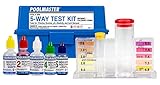
UV helps supplemental sanitation, but chlorine, pH, and alkalinity still need testing.
View on Amazon
A clean cartridge helps protect flow through UV equipment and clears cloudy water faster.
View on Amazon
Keeps leaves and debris from starving the pump, filter, and UV chamber for water.
View on AmazonFAQ
Should UV pool return jets point up or down?
A slight downward and sideways angle is often a good starting point because it supports circulation below the surface while still moving water toward the skimmer.
Can poor return jet direction reduce UV performance?
Indirectly, yes. UV treatment only happens when water reaches the chamber, so poor pool circulation can leave some areas with fewer treatment passes.
How do I know if my pool has dead zones?
Look for recurring dirt piles, algae-prone corners, floating debris that does not reach the skimmer, or cloudy areas that return after brushing.
Do I still need chlorine with a UV pool?
Yes. UV supports sanitation, but residential pools still need a measurable sanitizer residual in the water along with balanced pH and regular testing.