UV Pool Filter Union O-Ring Inspection: Stop a Small Drip Before It Reaches the Housing
| November 22, 2026
Disclosure: This article contains affiliate links. As an Amazon Associate, UV Pool Filter may earn from qualifying purchases.
A small drip at a UV pool filter union can be easy to dismiss, especially when the pump is still moving water. It is worth stopping to inspect the union O-ring before water reaches the housing, electrical connections, or the equipment pad. A wet fitting does not prove that the O-ring is the problem, so use the exact instructions for your UV system and work from the source of the leak.
Shut down the system before touching the union
Use the normal controls to stop circulation, then isolate electrical power at the approved disconnect as the manufacturer requires. If your plumbing is pressurized, follow the equipment manual’s documented shutdown and pressure-relief procedure before loosening a union nut. A timer, dark lamp, or quiet pump is not proof that the equipment is de-energized.
Do not open or loosen the connection while water is spraying, the enclosure or cord is damaged, a breaker or GFCI is tripping, or you smell burning. Keep the work area dry. The Pentair BioShield UV System Installation and User’s Guide is a useful example of why model-specific installation and service instructions matter; it is not a universal procedure for every UV system.
Find the actual source of the drip
Photograph the fitting before wiping it dry. Look above the union for a trail from another connection, a nearby valve, or condensation. Then dry the outside and watch where new moisture first appears during a safe, brief observation allowed by the manual. Water can travel along pipe and threads, so the lowest wet spot is not always the source.
Do not tighten the nut repeatedly to see whether the drip stops. Over-tightening can distort a seal, damage threads, or stress the housing. Do not apply thread sealant to a union O-ring unless the manufacturer specifically calls for it; the O-ring seals its designed surfaces, not the pipe threads.
Inspect the union O-ring carefully
With water pressure relieved and the manual permitting owner service, separate the union without forcing it. Remove the O-ring with a blunt plastic tool or clean fingers rather than a sharp pick that can nick the groove. Check for a cut, flat spot, twist, hardening, swelling, grit, hair, or chemical residue. Inspect the groove and both mating faces for cracks, chips, scratches, or debris.
An O-ring that looks fine can still be the wrong size or material. Match the exact UV filter make, model, and approved part information. A similar-looking ring is not automatically compatible with pool water, temperature, UV equipment, or the pressure conditions in your system.
Clean and reassemble only as directed
Use only the cleaning method and lubricant specified by your equipment manual. Keep lint, sand, and pool chemicals out of the groove. Seat the O-ring evenly without twisting it, align the union faces, and hand-start the nut so the threads do not cross. Follow the manual for final tightening; this article intentionally gives no torque, pressure, flow, or gap values because they vary by equipment.
Before restoring service, confirm that the housing, union, valves, and electrical connections are positioned as the manufacturer requires. Restore water and power in the documented sequence. Observe the connection from a dry position, and stop for renewed moisture, spray, abnormal noise, an alarm, burning smell, or a repeated electrical trip. Never bypass a flow switch or other safety interlock.
Choose the replacement part by model
If the manual identifies an approved replacement, shop UV pool filter union O-ring replacement parts on Amazon. Confirm the manufacturer, model, dimensions, material, and service instructions before ordering. A generic pool-plumbing O-ring may fit a groove and still be unsuitable for the UV assembly.
Keep the rest of pool care consistent
Stopping a union drip does not replace filtration, circulation, balanced water, or the sanitizer residual in your pool-care plan. Use the Pool Chemical Calculator website, the iPhone app, or the Android app to organize water-care calculations, then follow product labels and professional guidance.

Safety note: This is pool-care information, not medical advice, electrical instruction, or a substitute for code-compliant service. Follow the exact equipment manual, product labels, local electrical code, and manufacturer restrictions. Do not change pressure limits, flow limits, wiring, valve settings, or safety devices based on this article. Stop and contact a qualified pool-equipment or electrical professional if the equipment is pressurized, leaking, electrically unsafe, damaged, or outside the owner-service instructions.
Recommended pool maintenance supplies
As an Amazon Associate, UV Pool Filter earns from qualifying purchases.

A clean cartridge helps protect flow through UV equipment and clears cloudy water faster.
View on Amazon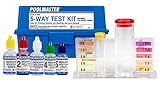
UV helps supplemental sanitation, but chlorine, pH, and alkalinity still need testing.
View on Amazon
UV does not replace a measurable sanitizer residual in the pool water.
View on AmazonFAQ
Can I run the UV pool filter when a union is dripping?
No. Shut the system down using the equipment manual’s procedure and determine whether the moisture is coming from the union or another connection before restarting. Do not operate uncertain electrical or pressurized equipment unattended.
Should I tighten a union nut to stop a small drip?
Do not guess. Repeated tightening can distort the O-ring or damage the union. Inspect the seal and mating surfaces only after pressure is relieved, and use the manufacturer’s tightening procedure.
Can I use any O-ring that fits the union?
No. Match the exact approved part and material for your UV system. Similar dimensions do not prove compatibility with the housing, water chemistry, temperature, or service conditions.
When should a professional inspect the union?
Use qualified service when there is spraying water, electrical damage, repeated breaker or GFCI trips, a cracked housing, an unclear pressure-relief procedure, or any step the owner manual does not authorize.