UV Pool Algae Prevention: Where UV Helps and Where Chlorine Still Wins
| June 21, 2026
UV is useful pool equipment, but it is not magic algae insurance. A UV pool sanitizer can reduce certain contaminants as water passes through the chamber, yet algae prevention still depends on sanitizer residual, brushing, filtration, sunlight management, and consistent testing.
The mistake is treating UV like a replacement for chlorine. It is better to think of it as a support system. UV can help lower the load on the water, but chlorine is still what protects the entire pool between trips through the equipment pad.
What UV actually does for algae prevention
A UV sanitizer exposes circulating water to ultraviolet light inside a sealed chamber. That exposure can help disrupt microorganisms that pass close enough to the lamp at the right flow rate. In a clean, balanced pool, this can support clearer water and reduce some of the organic pressure on sanitizer.
But UV only treats water while it is inside the unit. Algae on walls, steps, ladders, skimmer throats, shaded corners, and low-circulation areas still need sanitizer in the pool water, physical brushing, and enough circulation to move debris toward the filter.
Dose chemicals from real test results
UV can support sanitation, but clear water still starts with measured chlorine, pH, alkalinity, CYA, and calcium hardness. Use Pool Chemical Calculator before adding shock, acid, stabilizer, alkalinity increaser, or calcium products.
Download Pool Chemical Calculator for iPhone/iPad
Download Pool Chemical Calculator for Android
Use the pool calculator website
Where chlorine still does the heavy lifting
Chlorine protects the whole body of water. It remains active in the pool, not just in the plumbing, which matters because algae often starts in places where circulation is weakest. If the free chlorine level is too low for the stabilizer level, algae can get a foothold even with a working UV lamp.
- Walls and steps: UV cannot sanitize surfaces unless contaminated water leaves those surfaces and reaches the chamber.
- Dead zones: Poor return direction and weak circulation let algae start before it ever reaches the filter system.
- Sunny pools: UV equipment does not protect chlorine from sunlight; CYA management still matters.
- Heavy use: Swimmers, sunscreen, leaves, and rain can raise sanitizer demand faster than UV can compensate.
Compare UV pool sanitizers, test kits, replacement lamps, and algae-prevention supplies on Amazon. Match lamp type, quartz sleeve, voltage, plumbing size, and model number before ordering replacement parts.
How to use UV without letting algae sneak in
The best routine is simple: keep the UV system clean and running in its rated flow range, then maintain the pool like chlorine still matters because it does. That means testing often during hot weather, brushing weekly, cleaning the filter before pressure climbs too far, and correcting low sanitizer immediately.
Variable-speed pumps deserve extra attention. A very low RPM schedule can save electricity while starving the UV chamber and weakening skimming. Give the system enough higher-flow runtime each day to move water through the sanitizer and filter.

Quick algae-prevention checklist for UV pools
- Confirm the UV lamp is within its rated service life.
- Clean or inspect the quartz sleeve if performance drops.
- Run the pump long enough for useful daily circulation.
- Brush walls, steps, benches, and shaded corners weekly.
- Keep free chlorine matched to CYA and bather load.
- Clean the filter when pressure rises or return flow weakens.
- Shock only when testing and symptoms justify it, not as a substitute for routine balance.
Signs UV is helping but chemistry is falling behind
If the water looks mostly clear but keeps developing dusty green patches, slippery surfaces, or higher chlorine demand, the UV unit may be working while the pool still lacks enough residual sanitizer or brushing. That is a chemistry and circulation problem first.
If the water turns cloudy after storms, parties, or heat waves, test before adding products. Low chlorine, high pH, dirty filters, and low circulation can all look like equipment failure from the patio.
Recommended pool maintenance supplies
As an Amazon Associate, UV Pool Filter earns from qualifying purchases.
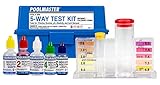
UV helps supplemental sanitation, but chlorine, pH, and alkalinity still need testing.
View on Amazon
A clean cartridge helps protect flow through UV equipment and clears cloudy water faster.
View on Amazon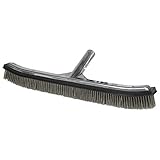
Brushing breaks up algae films and dead spots so sanitation and filtration work better.
View on AmazonFAQ
Does a UV pool sanitizer kill algae?
UV can affect microorganisms that pass through the chamber, but it does not directly treat algae attached to pool surfaces or sitting in low-circulation areas.
Can I use less chlorine with UV?
Some pools may see lower sanitizer demand, but you still need a measurable chlorine residual appropriate for the pool’s CYA level, sunlight, temperature, and use.
Why did my pool turn green with a working UV light?
The most common reasons are low chlorine, high CYA relative to chlorine, poor brushing, dirty filtration, weak circulation, or a lamp/sleeve that needs service.
Should I run my pump longer for UV algae prevention?
Often, yes. UV only treats water that passes through the chamber, so the pump schedule must provide enough flow and runtime for the pool’s size and conditions.
Bottom line: UV helps most when it supports a balanced pool, not when it is asked to replace chlorine, brushing, filtration, or testing.
Get Pool Chemical Calculator: iOS | Android | website.
Disclosure: This post contains Amazon affiliate links. As an Amazon Associate, UV Pool Filter may earn from qualifying purchases.