Pool Pump Runtime and Filter Cleaning: A Practical Clear-Water Schedule
| May 21, 2026
Pool water can look fine on Sunday and turn dull by Wednesday when the pump schedule and filter maintenance are a little off. That is the annoying part: cloudy water is usually not one big failure. It is the stack-up of short runtimes, dirty cartridges, weak circulation, and sanitizer that never gets a fair chance to work.
This guide gives you a practical way to set pool pump runtime, clean the filter at the right time, and troubleshoot cloudy water before it becomes an algae problem.
Start with circulation, not chemicals
When a pool turns hazy, most owners reach for shock first. Sometimes that is needed, but circulation is the first thing to check. Chlorine only works well when water is moving through the pool, the skimmer, the returns, and the filter long enough to remove fine debris.
A simple target is one full turnover per day in mild weather and more runtime during hot weather, heavy swimming, pollen season, or after storms. If you do not know your exact turnover rate, use water clarity and pressure readings as your feedback loop.
- Clear water, stable chlorine, normal pressure: your schedule is probably close.
- Dull water by afternoon: add runtime during daylight hours.
- Low skimmer pull or weak returns: check baskets, pump lid seal, and filter pressure.
- Pressure rising quickly after cleaning: the filter may be undersized, worn, or overloaded with debris.
How long should your pool pump run?
For many backyard pools, 8 to 12 hours per day is a reasonable starting point during swim season. Smaller pools with strong circulation may need less. Large pools, warm climates, saltwater systems, and pools with trees nearby often need more.
If you have a variable-speed pump, the best setup is usually a longer low-speed run instead of a short high-speed blast. Low speed keeps water moving, improves skimming consistency, helps UV and salt systems do their job, and usually costs less than running full speed for fewer hours.
Stop guessing your pool chemical doses
Once circulation is dialed in, accurate chemistry keeps the water clear. Pool Chemical Calculator helps you calculate chlorine, pH, alkalinity, stabilizer, calcium, salt, and shock doses without scribbling numbers on a wet test kit lid.
Use Pool Chemical Calculator online, download it for iPhone/iPad, or get it on Android.
Use filter pressure as your cleaning trigger
Do not clean the filter just because the calendar says so. Clean it when the pressure rises 20 to 25 percent above the clean starting pressure, or when flow visibly drops. Write the clean pressure on the equipment pad with a marker or keep it in your pool notes.
For cartridge filters, remove the cartridge and rinse between the pleats from top to bottom. Avoid blasting the fabric with a pressure washer because it can damage the fibers. If the cartridge feels oily, greasy, or never returns to normal pressure after rinsing, soak it with a cartridge cleaner before reinstalling.
For sand and DE filters, follow the manufacturer’s backwash instructions and watch the sight glass until the water runs clear. If cloudy water returns fast after backwashing, check whether the sand is channeled, the multiport valve is leaking internally, or the DE grid has tears.
If you need replacement cartridges, test strips, skimmer socks, or filter cleaning tools, compare options through this pool filter maintenance supplies search on Amazon.
The cloudy water checklist
Work through these in order. It saves money and prevents chemical whiplash.
- Empty baskets. A full skimmer basket can cut flow enough to make the whole pool look tired.
- Check pump prime. Air bubbles under the pump lid or at the returns can point to a suction-side leak.
- Record filter pressure. Compare today’s reading with the clean pressure.
- Brush walls and steps. Fine dust and early algae films often sit where circulation is weakest.
- Test chlorine and pH. High pH makes chlorine less effective; low chlorine lets organics build up.
- Run the pump longer for 24 to 48 hours. Give the filter time to remove the fine particles you just stirred up.

When UV sanitation changes the routine
A UV pool system can help reduce chloramines and support clearer water, but it still depends on flow. If the pump does not run long enough, less water passes through the UV chamber. If the filter is dirty, flow drops and contact time becomes inconsistent.
UV also does not leave a sanitizer residual in the pool. You still need a proper chlorine or salt system residual in the water itself. Think of UV as a strong support tool, not a replacement for testing and balancing.
A better weekly routine
Here is a simple rhythm that works for most residential pools:
- Daily or every other day: check skimmer baskets and confirm the pump is priming normally.
- Twice weekly: test chlorine and pH, especially during heat or heavy swimming.
- Weekly: brush steps, corners, ladders, and low-flow areas.
- Weekly: record filter pressure and water clarity notes.
- As needed: clean or backwash the filter after a 20 to 25 percent pressure rise.
If the pool is still cloudy after good circulation, clean filtration, correct pH, and adequate chlorine, then it is time to look deeper: high stabilizer, phosphates, dead algae, calcium scale, worn filter media, or a pump that is moving less water than expected.
Recommended pool maintenance supplies
As an Amazon Associate, UV Pool Filter earns from qualifying purchases.

Helps small particles clump so the filter can clear hazy water more efficiently.
View on Amazon
A clean cartridge helps protect flow through UV equipment and clears cloudy water faster.
View on Amazon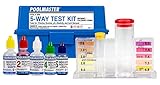
UV helps supplemental sanitation, but chlorine, pH, and alkalinity still need testing.
View on AmazonFAQ
Is it better to run my pool pump during the day or at night?
Daytime runtime is useful because sunlight, swimmers, and heat all increase sanitizer demand. If electricity rates are cheaper at night, split the schedule: some daytime circulation for skimming and sanitation support, plus lower-cost overnight runtime.
Can a dirty filter cause cloudy pool water?
Yes. A dirty filter can reduce flow so much that water stops circulating well. It can also push fine debris back into the pool if the media is damaged or overloaded.
How often should I clean a cartridge pool filter?
Clean it when pressure rises 20 to 25 percent above the clean starting pressure. In heavy pollen, storms, or high-use periods, that may happen much faster than the normal monthly routine.
Do UV pool systems mean I can run the pump less?
Not usually. UV sanitation only treats water that passes through the chamber, so it needs adequate flow and runtime. Shortening runtime too much can reduce the benefit.
Why is my pool cloudy even when chlorine is normal?
Common causes include poor circulation, dirty filter media, high pH, high stabilizer, early algae, calcium haze, or debris too fine for the filter to capture quickly.
Disclosure: This post contains Amazon affiliate links. As an Amazon Associate, UV Pool Filter may earn from qualifying purchases.