Help Choosing Pool pH Supplies: Increaser, Reducer, and Testing Basics
| March 6, 2019
Old pool pH product lists are not very helpful anymore. What matters is knowing what your water is doing, choosing the right pH increaser or reducer, and dosing carefully enough that you do not chase the same number all week.
Make the numbers easy before you buy chemicals
Before you add chlorine, pH adjuster, stabilizer, or algaecide, test the water and calculate the dose. The free Pool Chemical Calculator helps you avoid guessing and overcorrecting.
Download on iPhone | Get it on Android | Use PoolChemicalCalculator.com
A practical way to choose pool pH supplies
Pool pH tells you how acidic or basic the water is. When pH drifts low, water can sting eyes, irritate skin, corrode metal parts, and shorten the life of heaters and ladders. When pH climbs high, chlorine works less efficiently and the pool is more likely to turn cloudy or form scale on tile, salt cells, and equipment.
Start with a reliable test, not a shopping cart
Use fresh strips or a liquid test kit and test at elbow depth away from returns. If the reading is near the edge of the ideal range, do not dump in a full container of chemical. Small corrections are safer and cheaper. Retest after the pump has circulated the water long enough to mix the adjustment.
What to buy for pH control
The two basic products are pH increaser and pH reducer. Many pools also need alkalinity increaser because low alkalinity lets pH bounce around. If your pH keeps rising in a saltwater pool, also check total alkalinity, aeration from spa spillovers, and calcium hardness.
For supplies, compare current options on Amazon pool pH supplies, but use your pool volume and test result to decide what you actually need.
A simple weekly pH routine
- Test pH and total alkalinity before adding anything.
- Calculate the dose for your pool volume.
- Add the chemical slowly with the pump running.
- Brush any settled granules.
- Retest before making a second correction.
Common mistakes
The biggest mistake is treating pH like a one-product fix. High pH can come from high alkalinity, new plaster, saltwater aeration, or repeated shock use. Low pH can come from acidic sanitizer, rain, or aggressive overcorrection. If you only buy the cheapest bottle and pour blindly, you can create a bigger problem than the one you started with.
Recommended pool maintenance supplies
As an Amazon Associate, UV Pool Filter earns from qualifying purchases.
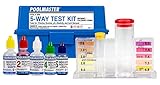
UV helps supplemental sanitation, but chlorine, pH, and alkalinity still need testing.
View on Amazon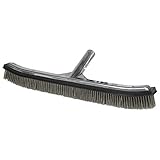
Brushing breaks up algae films and dead spots so sanitation and filtration work better.
View on Amazon
UV does not replace a measurable sanitizer residual in the pool water.
View on AmazonFrequently Asked Questions
What is the ideal pool pH range?
Most residential pools run best around 7.2 to 7.6. That range keeps chlorine more effective and makes the water more comfortable for swimmers.
Should I adjust alkalinity or pH first?
If total alkalinity is far outside the normal range, correct alkalinity first because it stabilizes pH. Then make smaller pH adjustments.
Can I swim right after adding pH chemicals?
Follow the product label. As a practical rule, circulate the pool, retest, and make sure the water is back in a safe range before swimming.
Affiliate disclosure: As an Amazon Associate, this site may earn from qualifying purchases. Product links are suggestions for further research, not a substitute for testing your own pool water or following the product label.


