UV Pool Backwash Timing: Clean Sand and DE Filters Without Wasting Flow
| July 19, 2026
Disclosure: This article contains affiliate links. As an Amazon Associate, UV Pool Filter may earn from qualifying purchases.
Backwashing is one of the easiest ways to restore flow through a sand or DE filter, but doing it too often can waste water, disturb filtration, and hide the real reason a UV pool is losing clarity. The better move is to backwash from pressure and flow clues, then rebalance chemistry after fresh water enters the pool.
For UV pool owners, circulation is the whole point. If the filter is packed with debris, less water moves through the UV chamber and the pool may look dull even when the lamp, sleeve, and ballast are working properly.
Use Pressure Rise, Not the Calendar
Start with the clean-filter pressure after a proper backwash and rinse. Most pools need attention when the gauge climbs about 8 to 10 PSI above that baseline, return flow weakens, or the pump basket starts showing signs of restriction. A fixed weekly schedule can be wasteful if the pool is lightly used, and too slow after storms, pollen, or heavy swimmer load.
After backwashing, use the Pool Chemical Calculator, iPhone app, or Android app to check sanitizer, pH, alkalinity, calcium, and stabilizer. UV supports clearer water, but it does not replace balanced pool chemistry.
Backwash Without Short-Cycling the Filter
Shut the pump off before moving the multiport valve. Set the valve to backwash, restart the pump, and watch the sight glass or waste line until the water runs clearer. Shut the pump off again, switch to rinse, run briefly to settle the filter bed, then return to filter mode.
- Never move a multiport valve while the pump is running.
- Record the pressure after the filter returns to normal operation.
- Top off the pool if the water level drops below the skimmer opening.
- Retest chemistry after adding fresh water.

Why Flow Matters for UV Performance
A UV unit treats water that actually reaches the chamber. Dirty filter media, clogged laterals, packed DE grids, and blocked return paths reduce circulation and give cloudy water more time to linger in the pool. Restoring filter flow helps the UV system see more turnover while the filter removes the particles that make water look hazy.
When Backwashing Is Not Enough
If pressure rises again within a day or two, the filter may need deeper service. Sand can channel, DE grids can tear, and valves can leak internally. Repeated backwashing without finding the restriction wastes water and can still leave the UV system starved for circulation.
Recommended pool maintenance supplies
As an Amazon Associate, UV Pool Filter earns from qualifying purchases.

Keeps leaves and debris from starving the pump, filter, and UV chamber for water.
View on Amazon
A clean cartridge helps protect flow through UV equipment and clears cloudy water faster.
View on Amazon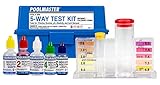
UV helps supplemental sanitation, but chlorine, pH, and alkalinity still need testing.
View on AmazonFAQ
How often should I backwash a UV pool filter?
Backwash when filter pressure rises about 8 to 10 PSI above the clean baseline, return flow weakens, or debris load is unusually high. Do not backwash only because a calendar says to.
Does backwashing improve UV sanitizer performance?
It can help indirectly by restoring circulation. UV systems need steady flow through the chamber, but sanitizer level and water balance still have to be maintained separately.
Should I retest water after backwashing?
Yes. Backwashing and topping off the pool add fresh water, which can shift chlorine, pH, alkalinity, hardness, and stabilizer readings.