UV Pool Autofill Valve Checks: Stop Dilution Before Sanitizer Drops
| August 30, 2026
Disclosure: As an Amazon Associate, UV Pool Filter may earn from qualifying purchases through links that use the pooluv1-20 affiliate tag.
An autofill valve is easy to ignore because it works quietly in the background. When it sticks open, leaks through the float assembly, or keeps topping off after the pool reaches its normal level, it can dilute sanitizer and minerals every day. For a UV pool, that slow dilution can look like a lamp problem, a filter problem, or poor circulation when the real issue is fresh water entering too often.
Check the autofill box during your weekly equipment walk. The valve should stop cleanly, the float should move freely, and the water level should hold steady once the pool reaches the midpoint of the skimmer opening. After any repair or adjustment, use the Pool Chemical Calculator, iPhone app, or Android app to calculate chemical corrections from fresh test results.
Autofill warning signs to catch early
- Listen for water running in the autofill box when the pool is already at the normal level.
- Check whether the overflow line, deck drain, or nearby soil stays wet in dry weather.
- Look for a float that rubs the box wall, hangs crooked, or cannot rise high enough to shut off.
- Compare water level changes against weather, splashout, and backwashing instead of assuming every drop is evaporation.
- Retest stabilizer, salt, calcium hardness, and alkalinity if readings keep drifting lower without an obvious reason.

Why dilution affects UV pool care
UV systems help sanitize as water passes through the chamber, but they do not replace the residual sanitizer that protects the pool between circulation cycles. If an autofill valve keeps adding water, free chlorine can fall faster, stabilizer can become too low for outdoor sunlight, and salt readings can drift below the generator’s preferred range.
Dilution also makes troubleshooting messy. A clean quartz sleeve, strong return flow, and correct pump runtime will not compensate for constant fresh water replacement. Before blaming the UV lamp or ballast, confirm the pool is not quietly overflowing or refilling all day.
Simple autofill checks and corrections
Start by removing leaves, grit, and insects from the autofill box. Move the float by hand and confirm it shuts off without sticking. If the valve continues to seep, replace the worn float valve, washer, or assembly instead of cranking the adjustment tighter and hoping it seals.
Once the water level is stable, run the pump long enough to mix the pool and test again. Make small chemical adjustments in the right order, especially if low stabilizer, low salt, or low calcium hardness show that the pool has been diluted for several days.
Recommended pool maintenance supplies
As an Amazon Associate, UV Pool Filter earns from qualifying purchases.
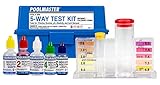
UV helps supplemental sanitation, but chlorine, pH, and alkalinity still need testing.
View on Amazon
UV does not replace a measurable sanitizer residual in the pool water.
View on Amazon
A clean cartridge helps protect flow through UV equipment and clears cloudy water faster.
View on AmazonFrequently Asked Questions
Can an autofill valve make UV pool chemistry unstable?
Yes. A stuck or overactive autofill valve can dilute chlorine, stabilizer, salt, calcium hardness, and alkalinity faster than normal circulation can recover.
How do I know if the pool autofill is adding too much water?
Watch for a constantly wet overflow line, water level that never drops in dry weather, unusually low chemical readings, or a valve box that keeps refilling after the pool reaches its normal level.
What should I test after fixing an autofill problem?
Test free chlorine, pH, total alkalinity, calcium hardness, stabilizer, and salt if the pool uses a salt system, then calculate corrections from fresh readings.