Pool Clarifier vs. Flocculant: Which One Clears Cloudy Water Faster
| June 6, 2026
When your pool turns hazy, you’ve got two main options on the shelf: clarifier or flocculant. They both promise to fix cloudy water, but they work completely differently — and picking the wrong one wastes time, money, and chemicals.
Here’s what actually matters when you’re staring at a milky pool on a hot June afternoon.
Why Pool Water Gets Cloudy in the First Place
Cloudy water is almost always about particles — tiny bits of dead algae, dust, sunscreen, skin cells, and other debris that are too small for your filter to catch. Your filter grabs anything above a certain micron size, and the rest just floats around, scattering light and making the water look dull or milky.
Sometimes the cloudiness is chemical — high pH, low chlorine, or calcium hardness out of range. Rule those out with a test before reaching for clarifier or floc. If your numbers are off, fix the chemistry first. Clarifier and flocculant can’t compensate for unbalanced water.
What Pool Clarifier Does
Clarifier is a coagulant. You pour it in, and it causes those tiny suspended particles to clump together into larger particles. Once they’re bigger, your filter can actually trap them. The filter does the work — you just keep it running.
The upside: clarifier is hands-off. Dose it, run your pump for 24 hours, and usually within 24-48 hours the water clears noticeably. No vacuuming, no pool downtime.
The downside: it’s slow. If your pool is heavily cloudy, clarifier might need multiple doses over several days. And if your filter is dirty or undersized, it won’t have enough capacity to trap the clumped particles fast enough to matter.
Use clarifier when:
- Water is mildly to moderately hazy
- You want a low-effort fix
- Your filter is in good shape
- You can wait 1–3 days for results
A bottle of pool clarifier on Amazon typically runs $10–20 and covers 10,000–20,000 gallons per dose — it’s cheap insurance to keep on hand for the season.
Before adding any clarifier or flocculant, make sure your chemistry is balanced first. Use the free Pool Chemical Calculator or download the app at poolchemicalcalculator.com/app for iOS and Android — it calculates exact doses based on your pool size and current readings.
What Pool Flocculant Does
Flocculant (or “floc”) is the aggressive option. It also groups particles together, but instead of making them filter-friendly, it makes them heavy enough to sink to the bottom as a thick layer of sediment.
The process:
- Add the flocculant while the pump is circulating
- Turn the pump OFF and let everything settle 8–24 hours (overnight works best)
- Vacuum the sediment to waste — bypass the filter and drain that water directly out
- Top off the pool with fresh water and rebalance your chemistry
The upside: floc clears even severely green or cloudy water in one treatment. It’s fast and dramatic if you’re dealing with algae aftermath or a pool that’s been neglected for weeks.
The downside: it’s labor-intensive. You need to vacuum to waste, which requires the right valve position on your multiport valve. You’ll also lose 2–6 inches of water depending on how much sediment settles out.
Use flocculant when:
- Water is severely cloudy or greenish
- You’ve treated an algae bloom but dead algae is still floating
- You want the pool swim-ready within 24 hours
- You’re okay with vacuuming and adding fresh water
Which One Should You Use Right Now?
If your pool looks lightly hazy — you can still see the bottom drain but it’s a little blurry — start with clarifier. It’s cheaper, easier, and you won’t lose any water.
If your pool looks milky white or greenish and you can’t see below 2–3 feet, go with floc. Clarifier won’t cut through that in any reasonable timeframe.
One important rule: don’t use both at the same time. They can interfere with each other and make the cloudiness worse. Pick one, finish the treatment, wait until the water is clear, then reassess.
Getting the Dose Right
Overdosing clarifier is a real issue — too much overwhelms your filter and can actually make the water cloudy again. Stick to the label dose based on your pool volume, and don’t double up hoping for faster results.
Flocculant dosing also depends on pool volume. Most products recommend about 1 oz per 1,000 gallons for light cloudiness, and up to 2 oz per 1,000 gallons for severe cases. After vacuuming to waste, refill the pool and test chlorine, pH, and alkalinity before anyone gets in.

Recommended pool maintenance supplies
As an Amazon Associate, UV Pool Filter earns from qualifying purchases.
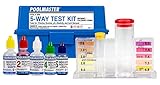
UV helps supplemental sanitation, but chlorine, pH, and alkalinity still need testing.
View on Amazon
Helps small particles clump so the filter can clear hazy water more efficiently.
View on Amazon
A clean cartridge helps protect flow through UV equipment and clears cloudy water faster.
View on AmazonFrequently Asked Questions
Can I use clarifier in a saltwater pool?
Yes. Clarifier works the same way in saltwater pools. Most are compatible with salt systems — just check the label to confirm before adding.
How long does flocculant take to settle?
Most sediment settles within 8–12 hours. Overnight is ideal. If you check after 4 hours and the water still looks hazy, give it more time before you start vacuuming.
My pool is still cloudy after using clarifier twice. What now?
Check your filter first — a clogged or spent filter media can’t trap particles no matter how well the clarifier works. Also retest your water chemistry, especially pH (should be 7.4–7.6) and chlorine. If both are in range and the filter is clean, switch to flocculant.
Will clarifier affect my chlorine levels?
Not directly. Some clarifiers can slightly affect pH over time, but the effect is minor. Keep testing weekly and adjust as needed — that’s standard pool maintenance regardless.
Should I shock before using flocculant?
If you have algae, yes — shock first to kill it, then use floc to collect the dead algae and sink it to the bottom. Using floc on live algae isn’t as effective because the organisms stay suspended longer.
Disclosure: This post contains Amazon affiliate links. As an Amazon Associate, UV Pool Filter may earn from qualifying purchases.