Pool Shock vs. Chlorine: What’s the Difference and When to Use Each
| June 3, 2026
If you’ve stood in the pool supply aisle staring at jugs of liquid chlorine and bags of pool shock, wondering what the difference actually is — you’re not alone. This is one of the most common questions pool owners have, and the confusion is understandable. Both products involve chlorine, but they work differently and serve different purposes. Getting this right means cleaner water, fewer headaches, and less money wasted on the wrong product at the wrong time.
What Is Chlorine, Exactly?
Regular pool chlorine comes in a few forms: trichlor tablets (the slow-dissolving 3-inch pucks), dichlor granules, and liquid sodium hypochlorite. The tablets are what most people use for day-to-day sanitation — you drop them in a floater or automatic feeder and they slowly release chlorine over several days, keeping your free chlorine level in the 1–3 ppm range.
Chlorine’s job is to oxidize bacteria, algae spores, and other organic contaminants before they get a chance to take hold. It also reacts with swimmer waste — sweat, body oils, urine — and forms combined chlorine (chloramines), which is what gives pools that harsh “chlorine smell” that people mistakenly think means the pool is over-chlorinated. In reality, that smell usually means the opposite: chloramines have built up and you need more free chlorine, not less.
What Is Pool Shock?
Pool shock is a high-dose chlorine treatment designed to rapidly raise your free chlorine level — usually to 10 ppm or higher — to burn off chloramines, kill algae, and oxidize stubborn organic waste. Think of it as a hard reset for your water chemistry.
The most common shock products are:
- Calcium hypochlorite (cal-hypo): The strongest option, typically 65–78% available chlorine. Fast-acting and effective, but it raises calcium hardness and can cloud water temporarily. Must be pre-dissolved before adding to the pool.
- Sodium dichloro-s-triazinetrione (dichlor shock): Stabilized chlorine shock, dissolves quickly, and works well at neutral pH. Has a lower available chlorine percentage but is convenient for regular maintenance shocking.
- Potassium monopersulfate (MPS or non-chlorine shock): Doesn’t add chlorine at all — oxidizes contaminants through a different chemical mechanism. Good for weekly oxidizing treatments without affecting stabilizer levels. Pool can be used within 15 minutes after treatment.
Get your pool chemistry right every time. Use the free Pool Chemical Calculator or download the app at poolchemicalcalculator.com/app (iOS & Android).

The Key Difference: Maintenance vs. Intervention
Here’s the simplest way to think about it: chlorine is for maintaining a safe, sanitized pool every day. Shock is for fixing problems or doing a weekly reset.
Regular chlorine runs in the background, continuously sanitizing your water as long as your feeder stays stocked. Shock is the tool you reach for when something goes wrong — or proactively once a week during swim season to prevent things from going wrong.
One practical way to understand the relationship: your chlorine tablets create free available chlorine. When that free chlorine reacts with ammonia and nitrogen compounds from swimmer waste, it becomes combined chlorine (chloramines). Pool shock breaks the chloramine bond and sends free chlorine levels high enough to “super-chlorinate” the water, burning those compounds off completely. This process is called breakpoint chlorination.
When to Use Regular Chlorine
- Daily maintenance to keep free chlorine at 1–3 ppm
- After adding fresh water to the pool
- When levels drop slightly after a rainy week
- Routine topping off via tablets or auto-dosing systems
When to Use Pool Shock
- Weekly during swim season — even if the water looks clear, weekly shocking prevents chloramine buildup
- After heavy bather load — pool parties, lots of kids, high-use weekends
- After heavy rain — rain dilutes chemicals and introduces contaminants
- When you see green or cloudy water — shock is the first line of defense against algae
- When you smell that “chlorine” odor — this is chloramines, not free chlorine, and shock breaks them down
- When combined chlorine exceeds 0.5 ppm — test kits that measure both free and total chlorine can reveal this
- Opening the pool for the season — always shock after removing the cover
How Much Shock Do You Need?
This is where a lot of pool owners go wrong — they eyeball it or use the same amount regardless of pool size. A 10,000-gallon pool needs a very different dose than a 25,000-gallon pool.
For maintenance shocking, the general rule with cal-hypo is 1 pound per 10,000 gallons to raise free chlorine by about 5–7 ppm. For algae treatment, you may need 2–3x that amount depending on severity. Always check the product label and ideally use a calculator — dosing by feel is how people end up with bleached swimsuits and eye irritation.
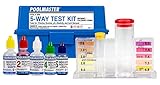
A good test kit goes a long way here. The Taylor K-2006 or a comparable 5-way test kit (check current prices on Amazon) gives you both free and total chlorine readings so you can calculate combined chlorine and know when shocking is actually needed — rather than guessing.
Tips for Shocking Effectively
Shock at dusk or night. UV light destroys unstabilized chlorine fast. If you shock during the day with cal-hypo, you can lose a significant portion before it even has a chance to work. Evening shocking lets the chlorine circulate overnight.
Run the pump during and after. Shock needs to circulate throughout the entire pool. Run your pump for at least 8 hours after adding shock, longer if treating algae.
Pre-dissolve cal-hypo. Never add calcium hypochlorite directly to the pool near your liner or vinyl surfaces — it can bleach or damage them. Mix it in a bucket of water first, then pour the solution around the pool perimeter.
Don’t swim until levels drop. After shocking, wait until free chlorine drops back to 1–3 ppm before letting anyone in the water. With cal-hypo this usually takes 8–24 hours depending on sunlight and water volume.
Can You Over-Shock a Pool?
Yes, but it’s rarely dangerous — just inconvenient. Extremely high chlorine levels (above 10 ppm) will irritate eyes and skin and can fade swimwear. The chlorine will naturally degrade with sun exposure and normal usage. If you’re in a hurry, a chlorine neutralizer (sodium thiosulfate) can bring levels down faster.
Under-shocking, on the other hand, is a real problem. If you don’t reach breakpoint chlorination — the threshold where combined chlorine is fully oxidized — you end up with partially treated water that still smells bad and can turn green within days.
Recommended pool maintenance supplies
As an Amazon Associate, UV Pool Filter earns from qualifying purchases.
UV helps supplemental sanitation, but chlorine, pH, and alkalinity still need testing.
View on Amazon
UV does not replace a measurable sanitizer residual in the pool water.
View on Amazon
A clean cartridge helps protect flow through UV equipment and clears cloudy water faster.
View on AmazonFrequently Asked Questions
Can I use shock as a substitute for regular chlorine tablets?
Not for ongoing maintenance. Shock works fast but burns off quickly — it’s not designed to provide sustained chlorine levels. Tablets dissolve slowly and keep your pool sanitized day after day. Use shock for resets and problem-solving, and tablets for baseline sanitation.
Why does my pool still smell like chlorine after I shocked it?
That smell is usually chloramines, not free chlorine. If it persists after shocking, you may not have reached breakpoint chlorination — meaning you didn’t add enough to fully oxidize the combined chlorine. Try shocking again with a higher dose, or use a non-chlorine shock (MPS) as a follow-up oxidizer.
How often should I shock my pool?
Once a week during active swim season is a solid baseline. Increase to twice a week after heavy use, hot weather spells (which speed up chlorine demand), or any sign of cloudiness or algae. Some pool owners do a maintenance shock every other week if bather load is light.
Is non-chlorine shock as effective as chlorine-based shock?
For oxidizing chloramines and organic waste, MPS (non-chlorine shock) works well and has the big advantage of allowing you to swim 15 minutes after treatment. However, it won’t kill algae or boost your sanitizer level — if you have an algae problem, you need chlorine-based shock.
Does shocking a pool affect pH?
Yes, depending on the product. Calcium hypochlorite tends to raise pH. Sodium dichloro shock is slightly acidic. Liquid chlorine (sodium hypochlorite) also raises pH. Always test and adjust pH after shocking — ideally keep it in the 7.2–7.6 range before adding shock for best effectiveness.
Amazon Disclosure: As an Amazon Associate, uvpoolfilter.com earns from qualifying purchases. Product links on this page may earn a small commission at no additional cost to you. This helps support the site so we can keep publishing free pool care guides.