UV Pool Lamp Replacement Power Check: Isolate Electricity Before Opening the Housing
| November 2, 2026
Disclosure: This article contains affiliate links. As an Amazon Associate, UV Pool Filter may earn from qualifying purchases.
A UV pool lamp replacement should begin with one boring question: is every source of power actually off? The lamp sits inside a water-handling system, so opening the housing before the equipment is isolated, depressurized, and dry can turn routine maintenance into an electrical or leak problem.
This guide covers a visual power-isolation check before opening a residential UV pool sanitizer. Your exact unit may use a plug, disconnect, controller, interlock, or another arrangement. Follow the equipment manual and local electrical rules; do not treat a generic photo or checklist as permission to open a live enclosure.
Shop UV pool lamp replacement gloves, flashlights, microfiber cloths, and pool test supplies on Amazon. Confirm the lamp, sleeve parts, and service accessories match your model before ordering.
What power isolation should accomplish
Power isolation is more than switching off a pump schedule. The lamp circuit, ballast, controller, and any connected equipment must be handled according to the manufacturer’s shutdown procedure. The goal is to prevent an unexpected restart while the lamp housing is open and to keep water away from electrical parts.
The Pentair BioShield UV System Installation and User’s Guide places safety warnings around electrical service, lamp handling, and the quartz sleeve. It also directs the installer to follow the product’s specific shutdown and leak-testing steps. Treat that manual as the authority for a Pentair unit, not this general article.
Start with the equipment manual and a dry work area
Find the exact manual before touching the reactor. Note the required shutdown sequence, whether water must be isolated or drained, and which parts are serviceable by the owner. Clear leaves and standing water from the equipment pad. Keep a dry flashlight, clean towel, and suitable gloves nearby, but do not use a tool to probe an electrical enclosure.
Look at the reactor, controller, cord, plug, disconnect, and nearby junction points. If any component is cracked, wet, corroded, warm, or visibly damaged, stop. Water near a lamp socket or ballast is a service call, not a cue to open the cover faster.
Trace the shutdown path instead of guessing
Follow the cord or conduit from the UV unit to its control point. A timer screen saying “off” does not prove that the lamp circuit is isolated. Use only the disconnecting method described by the manufacturer and allowed by local code. If the system is hard-wired, has multiple supplies, or is tied into automation, hand the job to a qualified pool-equipment or electrical professional.
Do not defeat a safety interlock, remove a cover to search for live parts, or rely on a non-contact tester as your only decision. A qualified person can verify the absence of voltage with the correct procedure and equipment. Homeowners should stay on the manual-approved side of the boundary.
Control water pressure before opening the lamp housing
Electrical isolation and hydraulic isolation are separate checks. Follow the manual for stopping circulation, closing or opening valves, relieving pressure, and draining the reactor. Never loosen a lamp end cap or quartz-sleeve retaining part on a pressurized vessel.
CMP’s DEL AOP 50 installation and product manual gives model-specific instructions about cooling, draining, and controlling valves before quartz-tube service. Those steps vary by installation, but the principle is consistent: stop the equipment, control the water, relieve pressure as directed, and keep the electrical area dry.
Make a simple pre-opening visual check
Before the housing is opened, pause and check these items in order:
- The exact manual is available and the shutdown steps are understood.
- The UV system is stopped through its approved control or disconnect method.
- Any automatic schedule or remote-control feature cannot restart the equipment during service.
- Water flow and pressure have been isolated or relieved exactly as the manual requires.
- The reactor, cord entry, controller, and work surface are dry and visibly intact.
- No person needs to remove an electrical cover or handle wiring to continue.
If one item is uncertain, stop there. A short pause is cheaper than a damaged lamp, flooded ballast, broken quartz sleeve, or shock hazard.
Keep lamp and quartz work gentle
Once a qualified person has confirmed the unit is safe to service, handle the lamp and quartz sleeve according to the manual. Keep fingerprints off lamp glass when the manufacturer calls for gloves, support the sleeve rather than letting it knock against the housing, and set removed parts on a clean, stable surface. Do not substitute a different lamp, seal, lubricant, or cleaning chemical because it looks similar.
After reassembly, perform the manual’s leak check before the lamp circuit returns to service. A dry electrical enclosure does not compensate for a pinched gasket or a retaining part that is not seated correctly.
Review the UV quartz sleeve seal inspection and quartz sleeve alignment check before returning the system to normal operation.
Do not let UV equipment replace water testing
UV treatment supports a pool-care routine; it does not replace sanitizer residual, balanced water, filtration, or circulation. Use the Pool Chemical Calculator for dosing math, or check results on iPhone and Android after testing.

When to call a professional
Call a qualified technician or electrician if the UV unit is hard-wired, the disconnect or cord is damaged, water has entered the controller or ballast area, the vessel remains pressurized, the lamp or quartz sleeve is broken, the system’s shutdown sequence is unclear, or the manufacturer restricts the task to trained service. Do not improvise around GFCI faults, interlocks, ballast wiring, or mercury-containing lamp disposal.
Safety note: This is pool-care information, not medical advice, electrical instruction, or a substitute for code-compliant service. Follow the equipment manual, product labels, local electrical code, and manufacturer restrictions. Maintain the sanitizer level required for your pool, and use qualified professionals for wiring, GFCI diagnosis, controller repair, lamp replacement, pressure relief, broken glass cleanup, lamp disposal, and any task the manufacturer limits to trained service.
Recommended pool maintenance supplies
As an Amazon Associate, UV Pool Filter earns from qualifying purchases.

A clean cartridge helps protect flow through UV equipment and clears cloudy water faster.
View on Amazon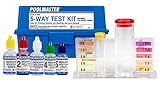
UV helps supplemental sanitation, but chlorine, pH, and alkalinity still need testing.
View on Amazon
UV does not replace a measurable sanitizer residual in the pool water.
View on AmazonFAQ
Is turning off the pool pump enough before replacing a UV lamp?
No. Pump shutdown controls circulation, but it does not by itself prove the UV lamp circuit is isolated. Follow the exact manual and approved disconnect procedure, and use a qualified professional when the unit is hard-wired or the isolation path is unclear.
Why must the UV equipment area be dry before lamp service?
Water can reach electrical connectors, ballasts, controllers, or cord entries when a housing is opened. A dry work area makes leaks visible and reduces the chance of bringing moisture into the electrical section. Stop if the equipment is already wet.
Do I need to relieve pressure before opening a UV reactor?
Follow the exact equipment manual, but never open a water-filled UV vessel as if it were unpressurized. The approved procedure may require stopping circulation, isolating valves, cooling the unit, draining it, and relieving pressure before service.
Can I replace a UV pool lamp if the controller has an interlock?
Only if the manufacturer specifically permits that service and the full shutdown procedure is followed. Never defeat or bypass an interlock. If the manual assigns the task to trained service, call a qualified technician.