UV Pool Metal Stain Prevention: Test Fill Water Before Iron Turns Brown
| August 3, 2026
Disclosure: As an Amazon Associate, UV Pool Filter may earn from qualifying purchases through links on this page.
Metal stains can show up fast in a UV pool when iron, copper, or manganese enters with fill water and then oxidizes. UV helps with clarity as water passes through the chamber, but it does not remove dissolved metals from the pool. If source water contains iron, a clean filter and a working UV unit still need help from testing, sequestrant, and balanced chemistry.
The best time to prevent stains is before fresh water has a chance to turn brown, green, gray, or tea-colored. Test the hose water, watch for color changes after chlorine additions, and treat metals before they plate onto steps, liners, plaster, ladders, lights, and return fittings.
Why metals matter in a UV pool
A UV system treats moving water. It does not grab dissolved metals, replace filtration, or make high-pH water safe from scale and staining. Iron and copper problems often become visible after shock, heavy chlorination, pH drift, or a big top-off from a well. Once metal oxidizes, the stain can be harder to remove than it would have been to prevent.
- Test fill water if the pool uses a well or older plumbing.
- Keep pH in range so metals are less likely to fall out of solution.
- Use a metal sequestrant when testing or history shows iron or copper risk.
- Clean the filter after treatment so captured material does not keep circulating.
Simple prevention routine
Before adding a lot of new water, run a fresh test for pH, alkalinity, calcium hardness, free chlorine, and metals if your kit supports it. If the pool has a history of staining, add sequestrant according to the label before the water is aggressively chlorinated. Then circulate long enough to move treated water through the whole pool and filter.
Brush early discoloration as soon as you see it. A light stain on a step or near a return can be a warning that the water is drifting out of balance. Do not guess at acid, chlorine, or stain remover doses. Use the Pool Chemical Calculator to size chemistry changes by pool volume, and keep the iOS app or Android app handy when you are testing at the equipment pad.
What to buy before stain season
A good stain-prevention kit is boring but useful: a reliable test kit, a metal test strip or drop test, sequestrant, filter cleaner, and a soft brush. If the pool uses well water, keep supplies on hand before a big refill, because waiting until the water changes color usually costs more time.

Shop Amazon Pools for metal sequestrants, pool stain tests, filter cleaners, brushes, and water testing supplies that help prevent stains before they set.
Recommended pool maintenance supplies
As an Amazon Associate, UV Pool Filter earns from qualifying purchases.
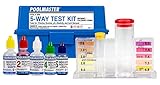
UV helps supplemental sanitation, but chlorine, pH, and alkalinity still need testing.
View on Amazon
A clean cartridge helps protect flow through UV equipment and clears cloudy water faster.
View on Amazon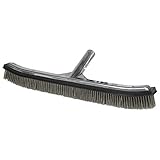
Brushing breaks up algae films and dead spots so sanitation and filtration work better.
View on AmazonFAQ
Can UV remove iron or copper from pool water?
No. UV treats water as it passes through the chamber, but dissolved metals need testing, sequestrant, filtration, dilution, or stain treatment depending on the source and severity.
Why did my pool turn brown after adding chlorine?
Brown or tea-colored water after chlorine can mean iron oxidized. Stop guessing, test the water, keep pH controlled, and use a metal treatment plan that matches the pool surface and source water.
Should I add sequestrant before or after filling?
If the pool has known metal risk, add sequestrant during or right after filling according to the label, then circulate well and clean the filter as needed.