UV Pool Salt Cell Cleaning: Keep Chlorine Production and UV Flow Working Together
| July 30, 2026
Disclosure: As an Amazon Associate, UV Pool Filter may earn from qualifying purchases through links on this page.
A salt cell and a UV system solve different parts of the clear-water problem. The UV unit needs steady circulation through the chamber, while the salt cell needs clean plates, correct salt level, balanced water, and enough runtime to maintain a chlorine residual.
When scale builds inside the cell, chlorine production drops and the equipment pad can start giving misleading clues. The water may look dull even though the pump is running, or the system may ask for more output when the real issue is a dirty cell, low salt, or poor balance.
Why salt cell cleaning matters on UV pools
UV does not replace chlorine. It helps expose circulating water to ultraviolet light, but bathers, sunlight, organics, and algae pressure still require a measurable sanitizer residual in the pool. A scaled salt cell can make that residual inconsistent.
- Inspect the cell plates for white scale, flakes, or debris before increasing output.
- Confirm salt level with a reliable test instead of trusting one dashboard reading.
- Keep pH, alkalinity, calcium hardness, and stabilizer in range to slow scale formation.
- Clean baskets and filters so the flow switch and UV chamber get steady water movement.
Clean only when the cell needs it
Remove power before opening equipment and follow the cell manufacturer’s instructions. Rinse loose debris first. If visible scale remains, use the recommended cleaning stand and diluted acid procedure for that model. Do not soak longer than directed, and do not acid-clean a cell that only needs a rinse.
If scale returns quickly, the bigger issue is usually water balance. High pH, high calcium hardness, and drifting alkalinity can scale both the salt cell and UV quartz sleeve. That makes testing more useful than repeatedly cleaning hardware.
Use chemistry data before changing output
Before raising the salt system percentage, test free chlorine, combined chlorine, pH, alkalinity, stabilizer, calcium hardness, and salt. Use the Pool Chemical Calculator to dose by pool volume instead of guessing. The iOS app and Android app make quick checks easier at the equipment pad.

Shop Amazon Pools for salt cell cleaning stands, replacement O-rings, pool test kits, brushes, and maintenance gear that helps protect chlorine production and flow.
When to look beyond the salt cell
If the cell is clean but chlorine stays low, check stabilizer, pump runtime, filter pressure, flow warnings, and the cell age. A weak cell can fail gradually, but low CYA, heavy swimmer load, dirty filters, and short runtime can mimic a bad cell.
Recommended pool maintenance supplies
As an Amazon Associate, UV Pool Filter earns from qualifying purchases.
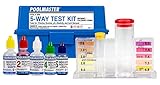
UV helps supplemental sanitation, but chlorine, pH, and alkalinity still need testing.
View on Amazon
A clean cartridge helps protect flow through UV equipment and clears cloudy water faster.
View on Amazon
UV does not replace a measurable sanitizer residual in the pool water.
View on AmazonFAQ
Does a UV pool still need a clean salt cell?
Yes. UV supports water clarity and helps reduce some chloramine problems, but the salt cell still has to produce chlorine for residual sanitation.
How often should I inspect a salt cell on a UV pool?
Check the cell during routine equipment checks and any time chlorine output drops, flow warnings appear, or scale is visible on plates and fittings.
Can acid cleaning damage a salt cell?
Yes. Acid cleaning should only be used when scale is present and according to the manufacturer instructions. Unnecessary acid cleaning can shorten cell life.