UV Pool Test Strip Storage Checks: Keep Readings Accurate Before Chemistry Drifts
| September 12, 2026
Disclosure: As an Amazon Associate, UV Pool Filter may earn from qualifying purchases through links that use the pooluv1-20 affiliate tag.
Pool test strips are only useful when the pads still react correctly. Heat, humidity, wet fingers, and open bottles can weaken the chemistry on the strip before it ever touches pool water, which can send UV pool owners chasing sanitizer, pH, or alkalinity problems that are really bad readings.
Before making a major chemical adjustment, check how the strips have been stored. If the bottle has been left in the sun, near the equipment pad, inside a damp shed, or open beside the pool, compare the result against a fresh kit. Then use the Pool Chemical Calculator, iPhone app, or Android app to dose from a reading you trust.
When test strip storage checks matter
- Two tests from the same water sample give noticeably different results.
- Chlorine or stabilizer appears to swing wildly from day to day.
- The bottle has been stored in direct sun, a hot garage, or a damp pool box.
- Color pads look faded, spotted, or slow to change after dipping.
- You are about to correct pH, alkalinity, calcium hardness, or sanitizer by a large amount.

How to protect strip accuracy
Keep strips in the original bottle with the cap closed tightly between tests. Store the bottle indoors or in a cool cabinet away from pump heat, direct sunlight, liquid chlorine, acid fumes, and rain splash. Never transfer strips into an unmarked bag or toolbox because the desiccant and sealed container are part of the product.
Use dry hands or clean tweezers to remove one strip at a time. Dip it for the label’s recommended time, hold it level while colors develop, and read it under consistent light. If the result seems impossible, retest once with the same bottle and once with a newer kit before adding chemicals.
Why UV pool owners should care
A UV system can reduce some sanitizer demand, but it does not make bad test data harmless. If old strips underreport chlorine, the pool can drift below target. If they overreport pH or alkalinity, unnecessary corrections can create scaling, cloudy water, or swimmer discomfort.
Good storage keeps routine checks boring, which is exactly the point. Once the strip result is reliable, calculate small, measured adjustments and let circulation move the water through the filter and UV chamber before retesting.
Recommended pool maintenance supplies
As an Amazon Associate, UV Pool Filter earns from qualifying purchases.
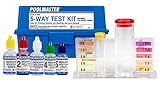
UV helps supplemental sanitation, but chlorine, pH, and alkalinity still need testing.
View on Amazon
A clean cartridge helps protect flow through UV equipment and clears cloudy water faster.
View on Amazon
UV does not replace a measurable sanitizer residual in the pool water.
View on AmazonFrequently Asked Questions
Where should pool test strips be stored?
Store pool test strips in the original sealed bottle in a cool, dry indoor location away from sunlight, rain, equipment heat, and chemical fumes.
Can old test strips cause bad pool chemistry decisions?
Yes. Expired or moisture-damaged strips can show false sanitizer, pH, alkalinity, or stabilizer readings, which can lead to unnecessary chemical additions.
Should UV pool chemistry be adjusted from one strange strip reading?
No. Retest first, preferably with a fresh kit or liquid test, then use a dosing calculator once the result matches the pool’s actual condition.