Hot Weather Pool Care: Why Chlorine Drops Faster and How to Stay Ahead
| May 31, 2026
Hot weather changes pool care fast. The same chlorine level that held all week in mild weather can crash during a stretch of sun, warm water, heavy swimming, and longer pump run demands. By the time the water looks dull, the pool may already be behind.
The fix is not panic-shocking every afternoon. It is a tighter summer routine: test more often, protect chlorine from sunlight, keep pH in range, run the pump long enough, and clean the filter before flow drops.
Why chlorine disappears faster in heat
Warm water speeds up chemical reactions and helps organics grow faster. Sunlight breaks down unstabilized chlorine. Swimmers add sweat, sunscreen, body oils, and debris. Put those together and the pool’s daily chlorine demand can jump sharply during a heat wave.
If you only test once a week, you may miss the pattern. The pool can be fine on Monday, low by Wednesday, and cloudy by Friday.
Test earlier in the day
Morning testing gives you a better read on what the pool held overnight. Late afternoon testing shows what survived sun and swimmers. Both can be useful, but if chlorine is repeatedly low in the morning, the pool is either under-dosed, under-producing, or consuming chlorine overnight.
During very hot weather, test free chlorine and pH at least every other day. Daily testing is not overkill during heavy swimming, storms, or a heat wave. It is cheaper than an algae cleanup.
Keep pH from drifting high
High pH makes chlorine less effective. That matters more in summer because the pool is already under extra pressure. If pH keeps creeping up, chlorine has to work harder while sunlight and swimmer load are already pulling it down.
Salt pools, waterfalls, spa spillovers, deck jets, and returns aimed upward can all push pH upward faster through aeration. Watch the trend instead of waiting until the water looks flat.
Check stabilizer, but do not overdo it
Cyanuric acid, or CYA, protects chlorine from sunlight. Too little stabilizer can let the sun burn through chlorine quickly. Too much stabilizer can make ordinary chlorine levels less effective against algae.
If chlorine vanishes every sunny afternoon, test CYA before adding more chlorine products blindly. If you use tablets all summer, remember that many tablets add stabilizer. CYA can climb quietly while you think you are only adding chlorine.
Calculate summer chlorine and stabilizer doses accurately
Hot weather is when guesswork gets expensive. Pool Chemical Calculator helps estimate chlorine, shock, pH, alkalinity, stabilizer, salt, calcium, and other pool adjustments from your actual test results.
Use Pool Chemical Calculator online, download it for iPhone/iPad, or install the Android app.
Run the pump long enough for the season
A pump schedule that worked in April may be too short in July. Hot weather usually means more chlorine demand, more debris, more swimmers, and more filtration needs. If the water starts looking tired in the afternoon, add runtime before blaming every chemical reading.
Variable-speed pumps make this easier. Longer low-speed circulation can improve skimming, filter more water, and support UV or salt equipment without the cost of running high speed all day.
If you need fresh test strips, a chlorine test kit, stabilizer, or summer maintenance supplies, this summer pool chlorine supplies search on Amazon is a practical place to compare options.
Brush more during hot stretches
Heat accelerates algae growth in low-flow areas. Brush steps, corners, ladders, shaded walls, benches, and the waterline more often when the weather is hot. The earlier you break up algae film, the less chlorine it takes to stay ahead.
A pool can still look clear while algae is starting on surfaces. Brushing prevents that quiet start from becoming a full cleanup.

Clean the filter before flow drops
Hot weather pool problems often stack together. A slightly dirty filter reduces flow. Lower flow reduces skimming and circulation. Weak circulation leaves warm, low-flow spots where algae gets comfortable.
Check pressure against your clean starting pressure. Clean or backwash when pressure rises 20 to 25 percent above that baseline. Also empty baskets more often during storms, pollen, and heavy swimming weekends.
Salt pools need output and runtime checks
Salt chlorine generators can fall behind in heat if output percentage or pump runtime is too low. The cell only produces chlorine while water is flowing and the system is active. If demand rises but runtime stays the same, free chlorine can drift downward.
Do not force the cell to recover a pool that is already cloudy or low. Use liquid chlorine to catch up, then adjust output and runtime so the salt system can maintain the level.
Where UV systems fit in summer
UV can support water quality and help reduce chloramines, but it does not leave a sanitizer residual in the pool. During hot weather, you still need proper chlorine, pH, CYA, filtration, and brushing.
Also remember that UV only treats water moving through the chamber. If pump runtime is too short or flow is weak from a dirty filter, less water gets UV exposure.
A practical hot-weather pool routine
- Test free chlorine and pH every day or every other day during heat waves.
- Check CYA before assuming chlorine loss is mysterious.
- Keep pH in range so chlorine works efficiently.
- Increase pump runtime during heavy heat, storms, or swimming.
- Brush low-flow areas more often.
- Clean filters and baskets before circulation drops.
- Use liquid chlorine for recovery if the pool falls behind.
Summer pool care is about staying ahead by a day. Once heat, sun, swimmers, and low flow get ahead of you, the fix takes more time, more chlorine, and more filter cleaning than a simple routine would have.
Recommended pool maintenance supplies
As an Amazon Associate, UV Pool Filter earns from qualifying purchases.
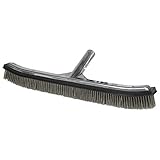
Brushing breaks up algae films and dead spots so sanitation and filtration work better.
View on Amazon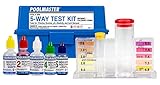
UV helps supplemental sanitation, but chlorine, pH, and alkalinity still need testing.
View on Amazon
A clean cartridge helps protect flow through UV equipment and clears cloudy water faster.
View on AmazonFAQ
Why does my pool lose chlorine faster in hot weather?
Heat, sunlight, swimmers, sunscreen, organics, and faster algae growth all increase chlorine demand. Low stabilizer or high pH can make the loss worse.
Should I run my pool pump longer during a heat wave?
Usually, yes. More heat and swimmer use often require longer circulation and filtration. Variable-speed pumps can often run longer at lower speed efficiently.
Does high pH matter more in summer?
Yes. High pH makes chlorine less effective, which is a bigger problem when sunlight and swimmer load are already increasing sanitizer demand.
Can a UV pool system prevent summer algae?
UV can help with water quality, but it does not replace chlorine residual, brushing, filtration, or proper pH and stabilizer management.
How often should I shock during hot weather?
Do not shock on a blind schedule. Test first. Shock or use liquid chlorine when free chlorine is low, combined chlorine is high, water is cloudy, or algae is starting.
Disclosure: This post contains Amazon affiliate links. As an Amazon Associate, UV Pool Filter may earn from qualifying purchases.