Pool pH and Alkalinity: Stop the Chemical Yo-Yo Before It Starts
| May 25, 2026
pH and alkalinity are boring until they are wrong. Then chlorine feels weak, eyes sting, scale shows up on tile, the heater gets cranky, and every chemical adjustment seems to bounce back by the next test.
If your pool keeps drifting high or low, the fix is not to keep dumping random acid or increaser into the water. The fix is understanding how pH and total alkalinity work together, then making smaller, better-timed adjustments.
pH is the comfort and chlorine number
pH tells you how acidic or basic the water is. For most pools, the practical comfort range is around the mid-7s. When pH climbs too high, chlorine becomes less effective, water can look dull, and scale becomes more likely. When pH drops too low, water can feel harsh and become rough on metal parts, heaters, ladders, and some pool surfaces.
This is why a pool can have a decent free chlorine reading and still act dirty when pH is high. The chlorine is present, but it is not working as efficiently as it should.
Total alkalinity is the pH buffer
Total alkalinity, often shortened to TA, helps resist sudden pH changes. Think of it like a shock absorber for pH. When alkalinity is too low, pH can swing quickly. When alkalinity is too high, pH often wants to rise and can be stubborn to bring down.
The mistake many pool owners make is treating pH and alkalinity as separate problems. They are connected. You can lower pH with acid and accidentally lower alkalinity too. You can raise alkalinity and watch pH move. Every adjustment has a little chemistry baggage attached.
Common signs pH is too high
- Chlorine seems weaker than usual.
- Water looks slightly dull even after filtering.
- Scale appears on tile, spillways, salt cells, or heaters.
- Acid demand becomes a regular weekly chore.
- Saltwater pools show frequent high-pH drift.
High pH is especially common in salt pools, pools with waterfalls or spa spillovers, new plaster pools, and pools with high aeration. Aeration drives carbon dioxide out of the water, which can push pH upward.
Common signs alkalinity is off
Low alkalinity often shows up as pH that will not stay put. You adjust it, and the number swings again. High alkalinity usually shows up as pH that keeps rising even after acid additions.
Do not chase alkalinity every single day. Test, adjust in reasonable steps, circulate, and retest. Overcorrecting is how pools end up on a chemical roller coaster.
Calculate pH and alkalinity changes before adding chemicals
Small math mistakes can swing pool water too far. Pool Chemical Calculator helps estimate acid, pH increaser, alkalinity increaser, chlorine, stabilizer, salt, calcium, and shock doses based on your pool size and actual test results.
Use Pool Chemical Calculator online, download it for iPhone/iPad, or install the Android app.
Test in the right order
Before adjusting anything, test pH and alkalinity with a kit you trust. If you use strips, make sure they are fresh, stored dry, and read at the correct time. Old strips can make you chase fake problems.
For recurring balance issues, a drop-style kit is worth it. You need reliable numbers when deciding whether to add acid, borax, soda ash, or alkalinity increaser. Guessing from a faded strip is how a simple correction becomes a weekend project.
If you need reagents, fresh strips, acid-resistant measuring tools, or alkalinity increaser, this pool pH and alkalinity supplies search on Amazon is a useful comparison starting point.
How to lower high pH without crashing alkalinity
Muriatic acid and dry acid both lower pH, and they also lower alkalinity to some degree. Add acid slowly, with the pump running, and avoid pouring it near metal fixtures, skimmers, or steps where concentrated acid can sit briefly.
If pH is high but alkalinity is already low, be careful. You may need a smaller acid dose, more circulation time, and a retest before adding anything else. The goal is a controlled correction, not a dramatic one.

How to raise low alkalinity
Alkalinity increaser is usually sodium bicarbonate. Add it in measured doses, circulate thoroughly, and retest before adding more. Raising alkalinity too far can set up a pH-rise problem that you then have to fight with acid.
If both pH and alkalinity are low, you may need to bring alkalinity up first, then fine-tune pH. If pH is low but alkalinity is fine, pH increaser may be the better tool. The exact move depends on both numbers, not one test pad.
Why salt pools often drift upward
Salt chlorine generators tend to raise pH over time because of aeration and chemistry at the cell. Spillovers, fountains, deck jets, and returns aimed upward can make that drift faster.
If your salt pool needs acid constantly, check total alkalinity, return direction, spillover schedule, and salt cell scaling. Lowering alkalinity modestly, reducing unnecessary aeration, and cleaning the salt cell only when needed can make the pool easier to manage.
Where UV systems fit
UV sanitation does not balance pH or alkalinity. It can help reduce chloramines and support sanitation, but water balance still controls comfort, equipment protection, and how well chlorine behaves in the pool.
If a UV pool smells harsh or looks dull, test pH before assuming the UV unit is failing. High pH can make chlorine underperform, while combined chlorine, poor flow, or a dirty filter can create symptoms that look like a sanitizer problem.
A simple weekly balance routine
- Test pH and chlorine at least twice weekly during swim season.
- Test alkalinity weekly until the pool becomes predictable.
- Make smaller corrections and retest after circulation.
- Track acid additions in salt pools so drift patterns become obvious.
- Clean filters and maintain circulation before blaming chemistry alone.
Balanced water is not about perfect numbers every minute. It is about keeping the pool in a range where chlorine works, swimmers are comfortable, and equipment is not being punished.
Recommended pool maintenance supplies
As an Amazon Associate, UV Pool Filter earns from qualifying purchases.
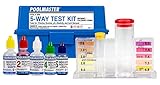
UV helps supplemental sanitation, but chlorine, pH, and alkalinity still need testing.
View on Amazon
A clean cartridge helps protect flow through UV equipment and clears cloudy water faster.
View on Amazon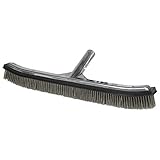
Brushing breaks up algae films and dead spots so sanitation and filtration work better.
View on AmazonFAQ
Should I adjust pH or alkalinity first?
If both are out of range, alkalinity often gets corrected first because it affects pH stability. But if pH is dangerously low or high, address that safely and then fine-tune alkalinity.
Why does my pool pH keep rising?
Common causes include high alkalinity, saltwater chlorine generation, waterfalls, spa spillovers, returns aimed upward, new plaster, and frequent aeration.
Does high pH make chlorine weaker?
Yes. As pH rises, chlorine becomes less effective. That can lead to dull water, algae pressure, or sanitizer problems even when free chlorine is measurable.
Can low alkalinity damage pool equipment?
Low alkalinity can allow pH to swing downward, and low pH can be corrosive to metal parts, heaters, ladders, and some surfaces. The risk comes from unstable or acidic water.
Does a UV pool system control pH?
No. UV sanitation does not control pH or alkalinity. You still need regular testing and chemical balance for comfort, chlorine performance, and equipment protection.
Disclosure: This post contains Amazon affiliate links. As an Amazon Associate, UV Pool Filter may earn from qualifying purchases.